
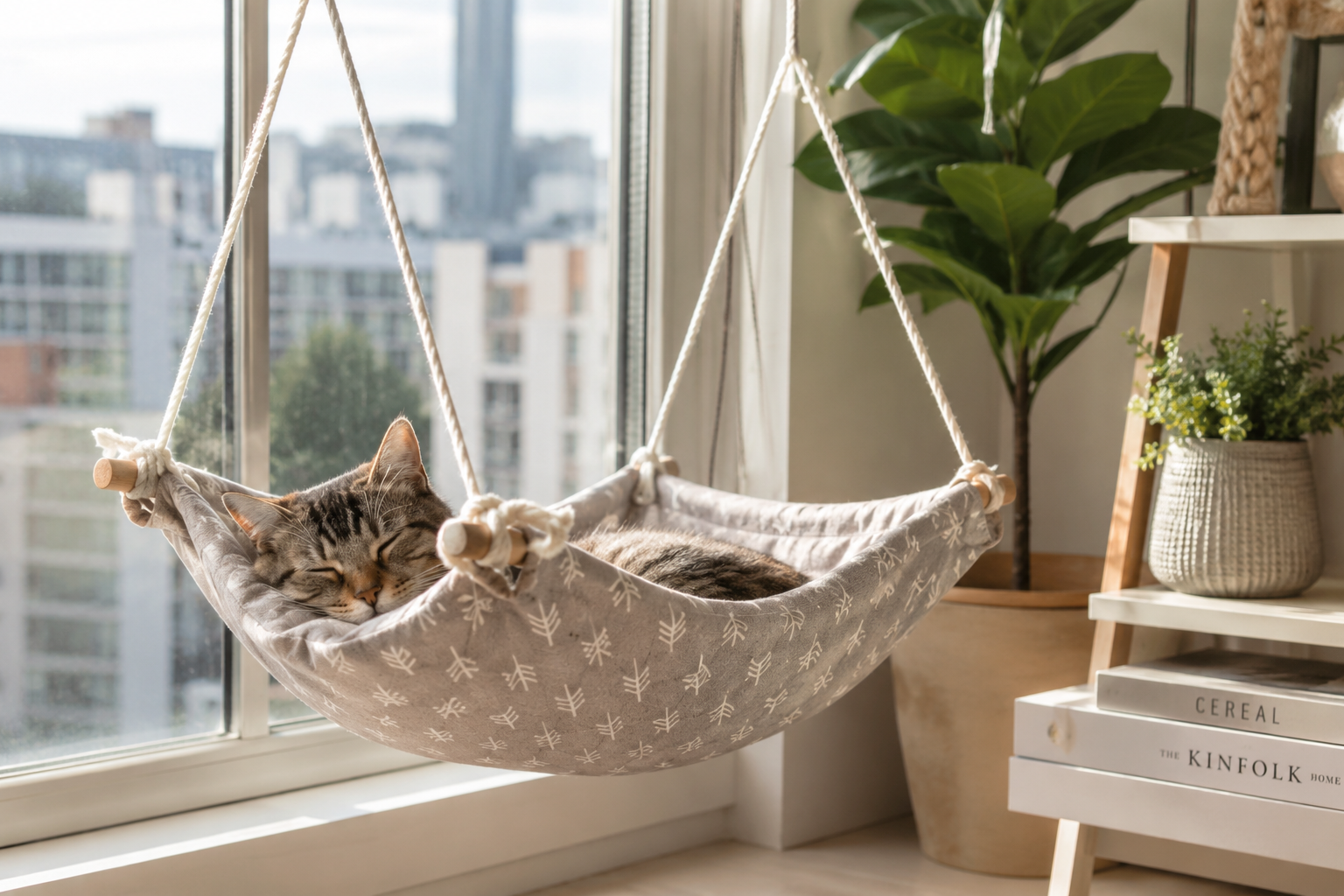
Finding comfortable resting spots for indoor cats can become difficult when living in apartments, condos, or smaller homes. Cats naturally enjoy elevated spaces where they can nap, observe their surroundings, and relax quietly throughout the day. A DIY hanging cat hammock is a practical sewing project that helps maximize space while creating a cozy area your cat may love using daily.
Unlike bulky pet furniture, a hanging hammock takes up very little room and may fit under chairs, beside windows, or between furniture legs. It also gives cat owners the chance to customize the fabric, size, and style to match their home decor while making something functional for their pets.
If you already enjoy sewing pet accessories, this project pairs nicely with other tutorials on DIY pet sewing projects, including your DIY snuffle mat guide and eco-friendly pet sewing ideas.
Why Cats Love Hammocks
Cats are naturally drawn to soft, elevated resting spots because these areas provide warmth, comfort, and a sense of security. According to the ASPCA cat care guide, cats benefit from environments that support climbing, resting, and quiet observation.
A hammock creates a gentle suspended surface that conforms slightly to the cat’s body while offering elevation off the floor. This makes hammocks especially attractive to indoor cats that spend most of their time lounging or observing activity around the home.
For homes with limited floor space, hammocks may also help reduce clutter compared to large cat towers or oversized pet beds.
Benefits Of Sewing Your Own Cat Hammock
Making your own cat hammock gives you more flexibility than many store bought options. You can customize nearly every part of the project based on your cat’s habits and your available space.
- Customize the hammock size for kittens or adult cats
- Choose fabrics that match your home
- Reuse leftover sewing materials
- Create removable washable covers
- Adjust hanging height easily
- Make the hammock portable for different rooms
Another benefit is durability. By sewing reinforced seams and selecting stronger fabric, you may create a hammock that lasts longer than cheaper commercial alternatives.
Choosing The Best Fabric For A Cat Hammock
The fabric you choose affects both comfort and durability. Cats tend to knead, stretch, and reposition themselves repeatedly before resting, so strong stitching and reliable fabric matter.
Good fabric choices include:
- Cotton canvas
- Denim
- Quilting cotton with interfacing
- Fleece lining for colder seasons
- Heavy cotton twill
Avoid fabrics that snag easily or become overly warm. Lightweight but sturdy materials often work best for daily use.
If you prefer sustainable sewing projects, you may repurpose old blankets, jeans, or cotton curtains similarly to the methods shared in your eco-friendly pet projects article.
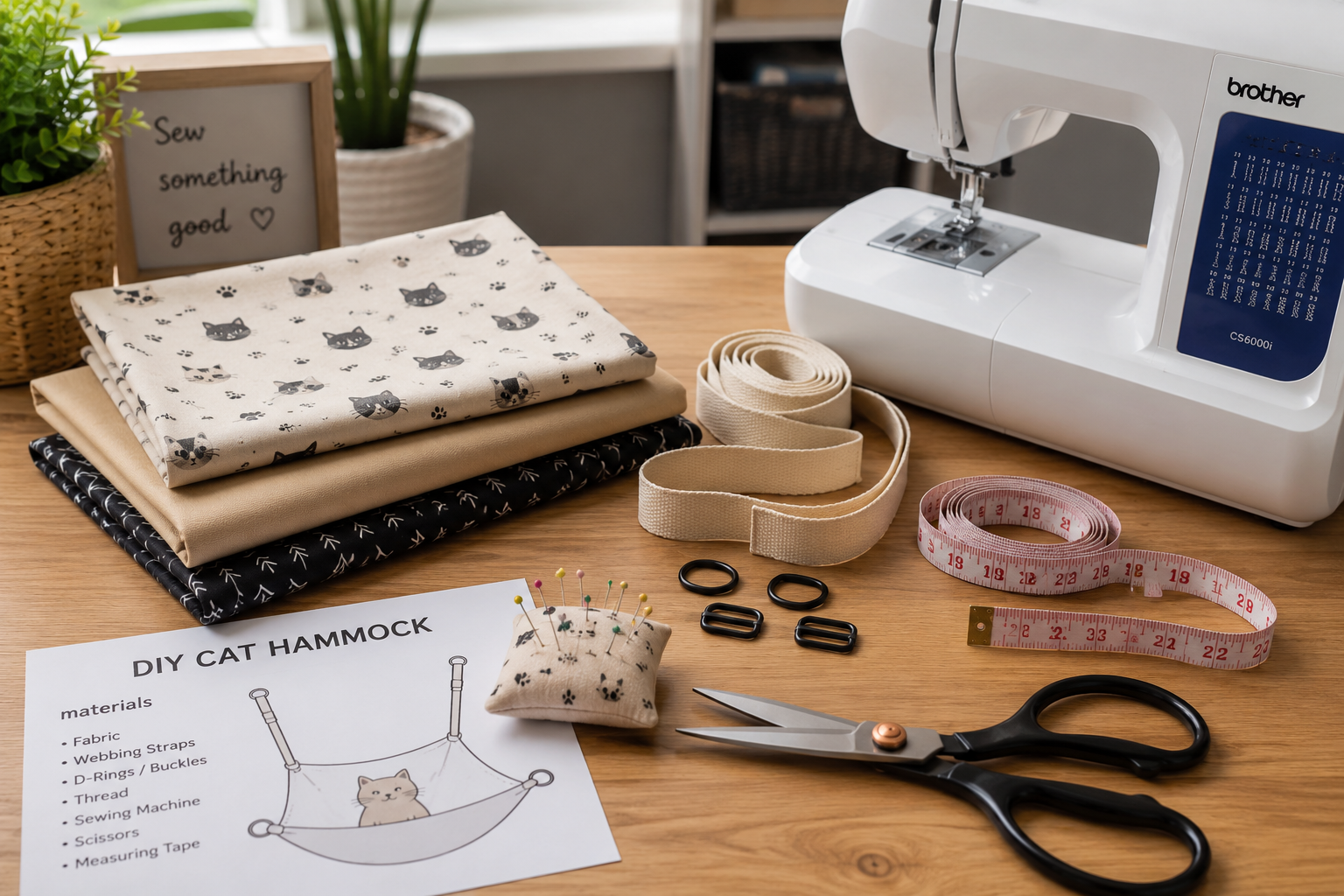
Materials You Will Need
- Strong cotton or canvas fabric
- Sewing machine
- Heavy duty thread
- Scissors or rotary cutter
- Measuring tape
- Four sturdy straps or webbing pieces
- Clips, hooks, or carabiners
- Pins or fabric clips
- Iron for pressing seams
You can browse beginner sewing materials from trusted crafting resources like JOANN Fabrics or sewing tutorials from The Spruce Crafts.
Where To Hang A Cat Hammock
One of the best parts about this project is flexibility. Hanging cat hammocks may fit in several areas around the home depending on your setup.
- Under sturdy chairs or tables
- Beside sunny windows
- Inside cat cages or enclosures
- Between furniture legs
- Mounted beneath wall shelves
Before installation, always test the structure carefully to confirm it can safely support your cat’s weight.
How To Measure The Right Hammock Size
Measure your cat while they are comfortably stretched out during a nap. Add a few extra inches on each side to create enough room for repositioning.
- Small cats and kittens: 16 x 16 inches
- Average adult cats: 18 x 22 inches
- Larger cats: 24 x 24 inches or larger
It is often better to make the hammock slightly larger than expected since cats enjoy changing sleeping positions frequently.
Step By Step Guide To Sewing A Hanging Cat Hammock
Step 1 Prepare The Fabric
Cut two equal fabric panels based on your measurements. If you want additional softness, you can also add batting or fleece between the layers.
Step 2 Layer The Fabric
Place the fabric pieces right sides together. If using padding, position it between the outer layers before pinning.
Step 3 Attach The Hanging Straps
Fold each strap slightly and position one at every corner. The looped ends should face inward between the fabric layers so they become secured once sewn.
Step 4 Sew Around The Edges
Sew around the perimeter while leaving a small opening for turning the fabric right side out. Reinforce all corners with backstitching for additional strength.
Step 5 Turn And Press
Turn the hammock right side out carefully and push the corners outward gently. Press the edges flat with an iron to create cleaner seams.
Step 6 Topstitch The Hammock
Topstitch around the outer edge to strengthen the seams and give the hammock a polished appearance.
Step 7 Install The Hardware
Attach clips or carabiners to the strap loops and secure the hammock beneath your chosen surface.
Safety Tips Before Letting Your Cat Use The Hammock
Always test the hammock thoroughly before allowing your cat to use it independently. Apply pressure manually and inspect the stitching carefully.
- Check seams regularly for wear
- Inspect clips and hooks monthly
- Wash the fabric periodically
- Avoid hanging near unstable furniture
- Do not overload with multiple pets
The Humane World cat care resources also encourage creating comfortable indoor environments that support natural feline behavior.
Ways To Customize Your Cat Hammock
Once you complete the basic version, you can personalize the design in several creative ways.
- Add reversible seasonal fabric
- Include removable cushions
- Sew matching cat blankets
- Use patterned straps
- Add personalized embroidery
If you enjoy coordinated pet accessories, you may also explore your Sewing Projects section or DIY Sewing category for additional inspiration.
Cleaning And Maintenance
Cats spend many hours resting throughout the day, so regular cleaning helps maintain hygiene and comfort.
- Machine wash removable covers weekly
- Vacuum loose fur frequently
- Air dry to preserve shape
- Inspect straps after washing
If your cat sheds heavily, darker fabrics may show fur more visibly. Choosing medium tone fabrics often helps maintain a cleaner appearance between washes.
Why This Project Works Well For Apartments
Large cat trees and oversized pet beds may consume valuable floor space in smaller homes. Hanging hammocks solve this problem by using unused vertical or under-furniture space instead.
This makes them especially useful for apartments, studio units, dorm setups, and compact living rooms where every square foot matters.
Because hammocks are lightweight and portable, you may also move them easily between rooms depending on where your cat prefers resting during different times of the day.
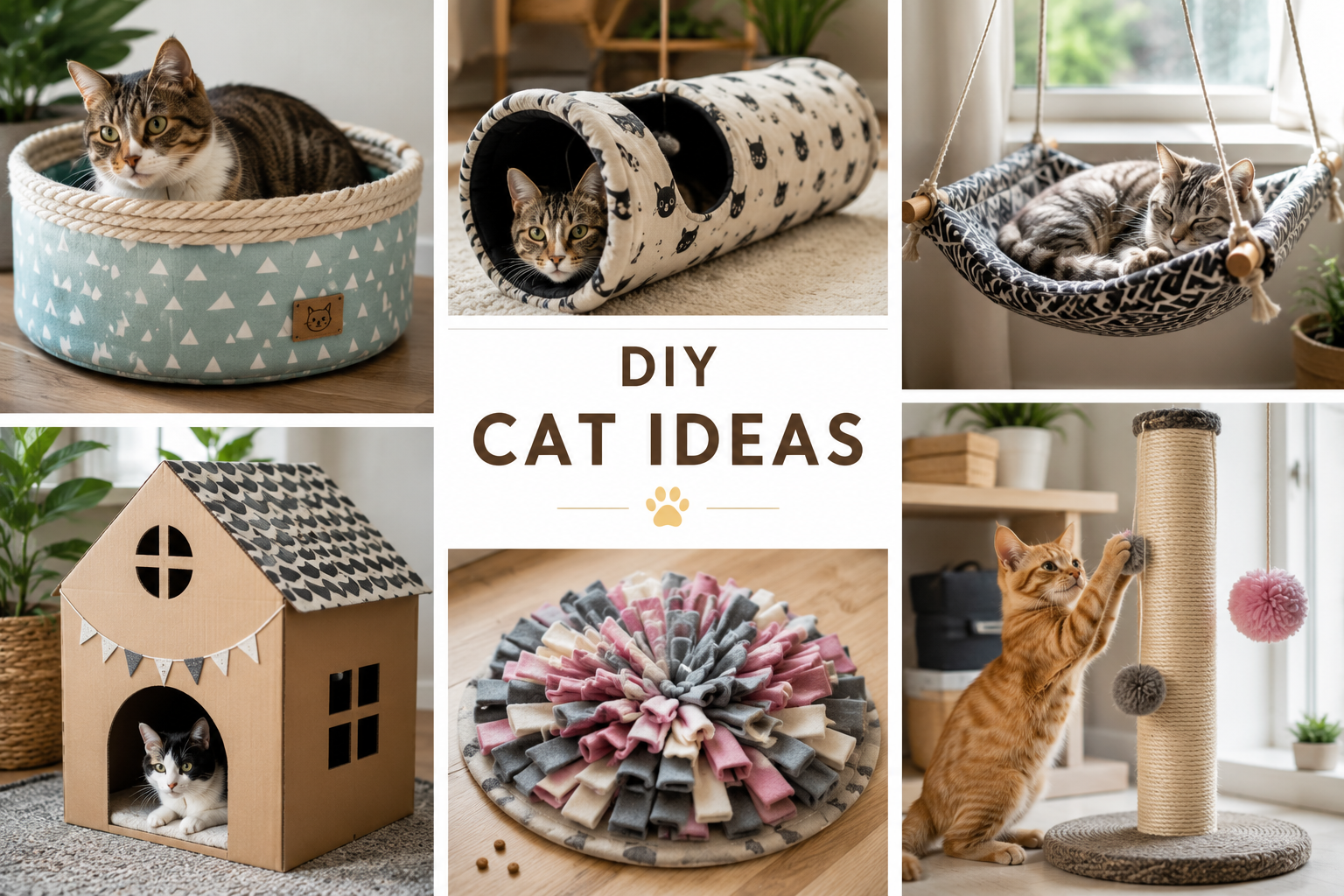
Additional DIY Cat Ideas
If your cat enjoys enrichment and cozy spaces, you may also like creating other sewing projects that combine comfort and stimulation.
- DIY Snuffle Mats
- Eco-Friendly Pet Projects
- DIY Pet Sewing Projects
- Pet Sewing Tutorials
These related projects help build stronger internal connections throughout your site while keeping readers engaged with more pet sewing inspiration.
Conclusion
A DIY hanging cat hammock is a practical sewing project that combines comfort, functionality, and space saving design. It creates a cozy elevated resting spot while using minimal floor space, making it especially useful for apartments and smaller homes.
With strong fabric, reinforced stitching, and careful placement, you can create a hammock your cat may enjoy daily for naps and quiet relaxation. The project is beginner friendly while still offering enough flexibility for more advanced customization.
Whether you prefer modern neutral fabrics or playful patterns, this sewing project gives you the opportunity to create something useful while adding a handmade touch to your pet’s environment.